Working to replace myself...
and a tribute to Bob Gleason

When I was first started learning how to build stringed instruments, we lived in a condo in Broomfield, CO. I was learning what I could from the internet, visiting other builders and making expensive sawdust in my basement workshop. There were a few places online in 2009 where I could order slotted fretboards, tuning machines, inlays, bridge blanks and other things that I couldn’t imagine how to make myself. One supplier was Bob Gleason from Pegasus Guitars. When I first found him online, (probably from a post on the Ukulele Underground Forum) I remembered the Pegasus headstock inlay on a tenor ukulele that I saw Jim Beloff play at the New York Uke Fest around 2007. (Oh man, I have some stories from that event.) It was a five string tenor that looked and sounded great. I decided that Bob must know what he was doing and I started ordering from him. As I progressed, I moved to Oregon in 2012 and started working in a real wood shop at Mya-Moe. I learned how to make my own parts or used Mya-Moe’s suppliers, so I lost touch with Bob and sort of forgot about him.
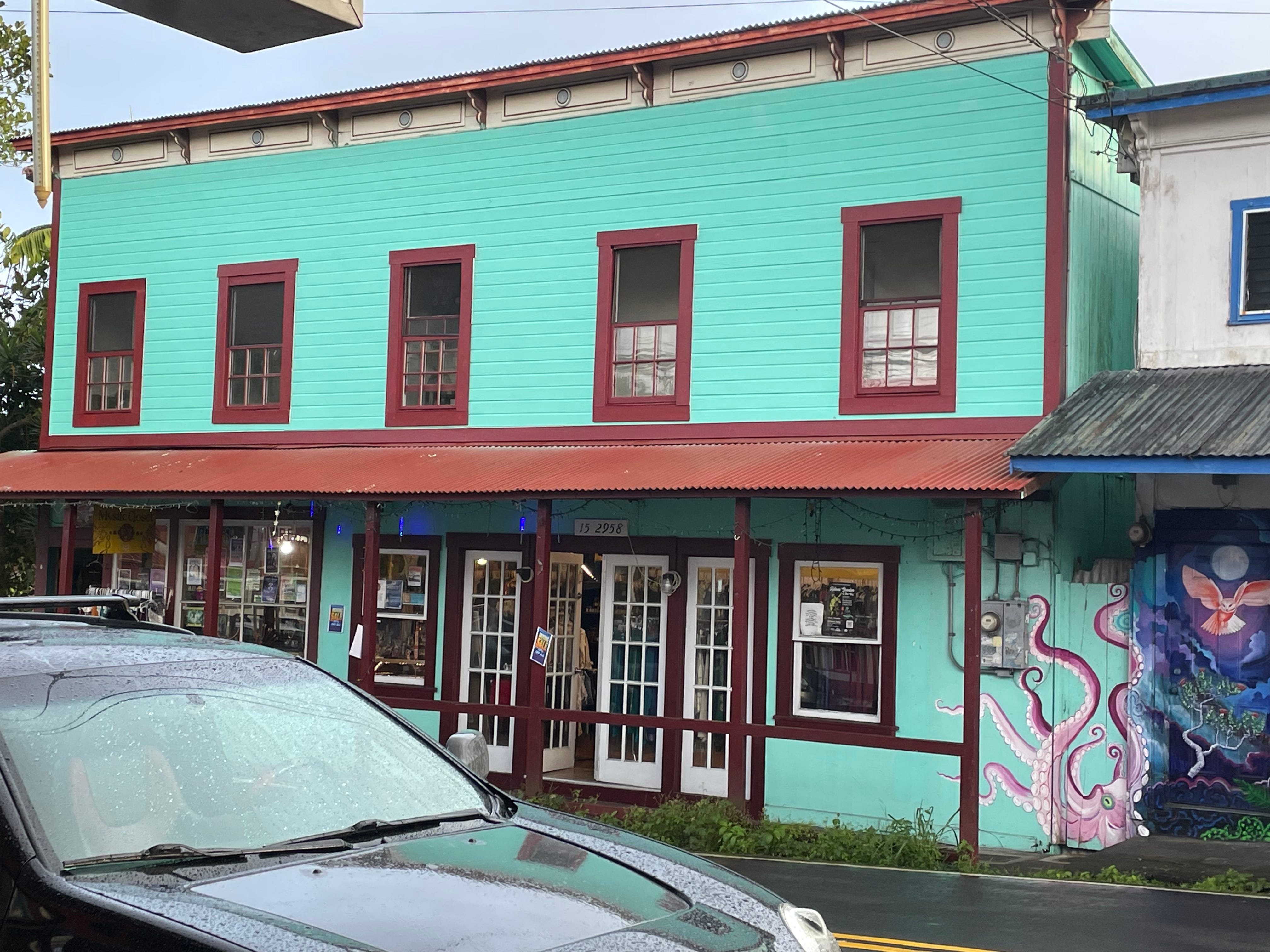
In 2022, I was the recipient of a grant from Mortise and Tenon Magazine to study the tools, techniques and materials of the original builders of the ukulele, circa 1880-1890. We planned a trip to Hawaii to visit the Bishop Museum and Shawn from www.ukulelefriend.com for research purposes. The rest of the trip would basically be tourism, but of course I dragged Henry and Nicole to visit several builders and ukulele shops as well. (Because I just can’t stop working and sit on the beach for a day, can I?) We were staying with our friends Andy and Pam on the rainy side of Hawaii when he mentioned we should visit his friend Bob Gleason. We met up for Thai food at Andy’s favorite spot, which was in the small town of Pahoa, whose old main street gave me a glimpse of early 20th century Hawaii. Bob invited us to visit his shop the next day, which was pretty close to Andy and Pam’s home.
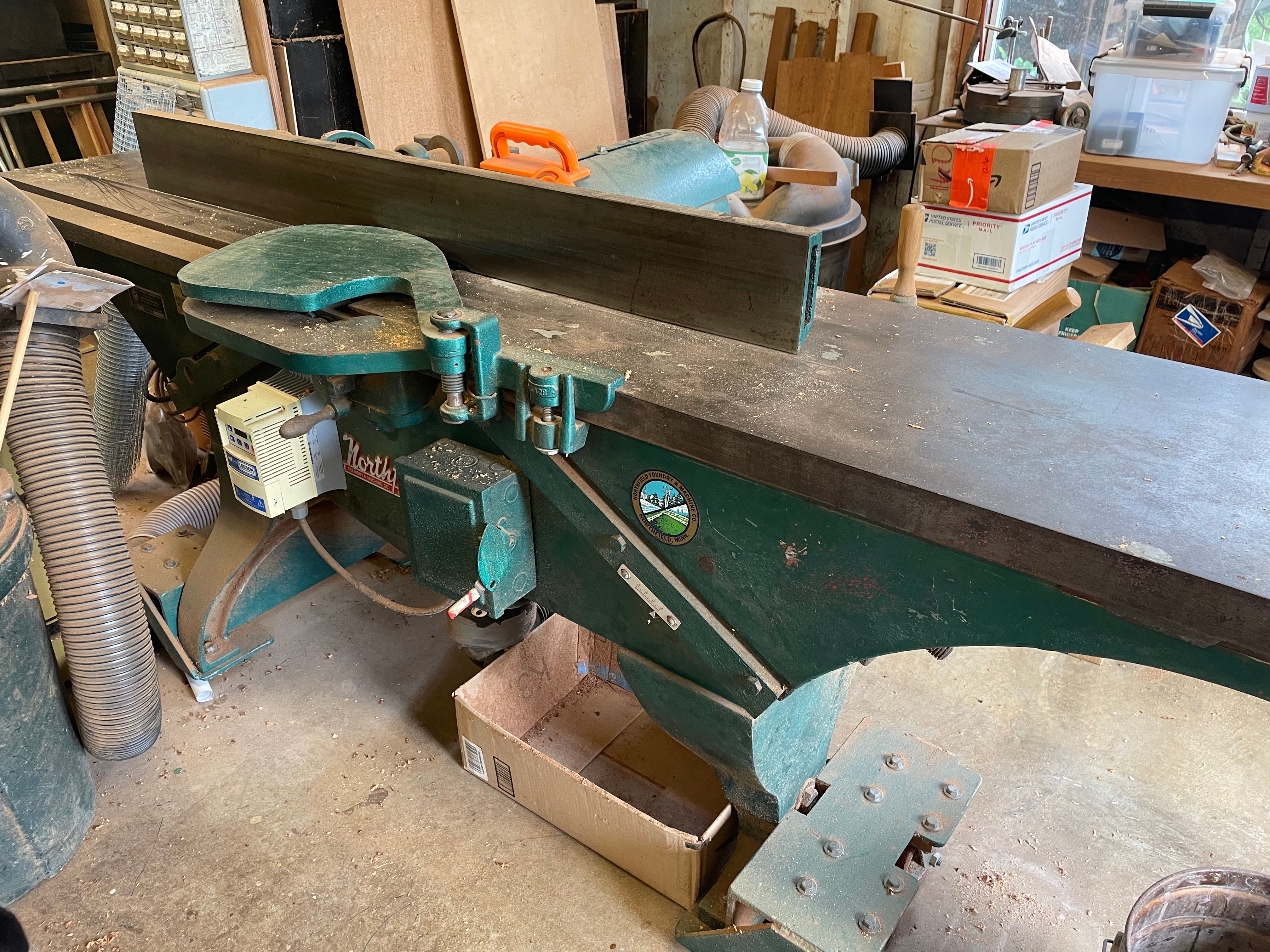
Our friend Melanie reminded me before our visit to Hawaii of a few bits of visitor/tourist/Haole etiquette. “When you visit, always bring a gift, something to eat or drink and say thanks, even before you step inside.” Bob and his wife Anne seemed touched by this and were very welcoming. Any misgivings Bob had might of have had about inviting us melted away the second we stepped in the shop and I said, “Wow, nice jointer. A Northfield, right? We are a long way from Minnesota, I bet that’s Naval surplus.” Bob slowly turned to look at me with a glint in his eye and told the whole story of how he found this cast iron beast, dragged it through the mud into his shop and restored it.
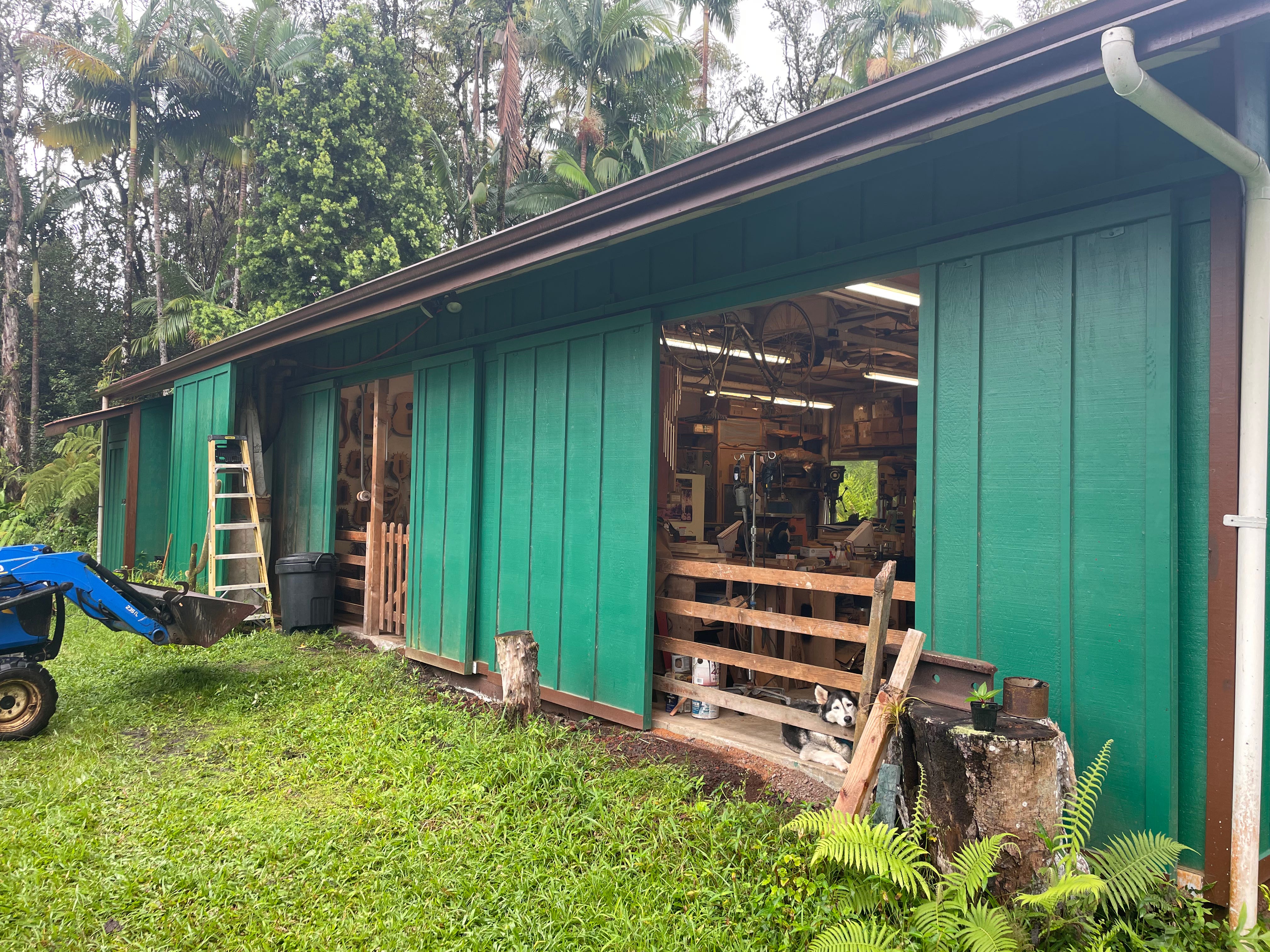
Bob’s shop shared some of the “open air” quality of other Hawaiian shops I visited, but he seemed to work harder to fight the never ending tropical dampness than others. He had a corrugated metal shed outside that housed his bigger logs, slabs and lumber. It had a dirt floor and no climate control but was suitable for storage and seasoning of rough materials. He then had a bigger building split in two, with his wood shop and machine tools in a in space protected from the rain, good ventilation and a concrete floor. His cast iron machines were free of rust and well maintained, with good electrical and dust collection. I was inspired by many clever jigs and fixtures that were shop made, including this radiused sanding fixture.
He then had a smaller space, fully climate controlled and de-humidified where his luthier work was done. All of his hand tools and equipment were in good shape and rust free, a hard job in a climate where putting chisel back in the drawer with out wiping it with oil may rust in a matter of days.
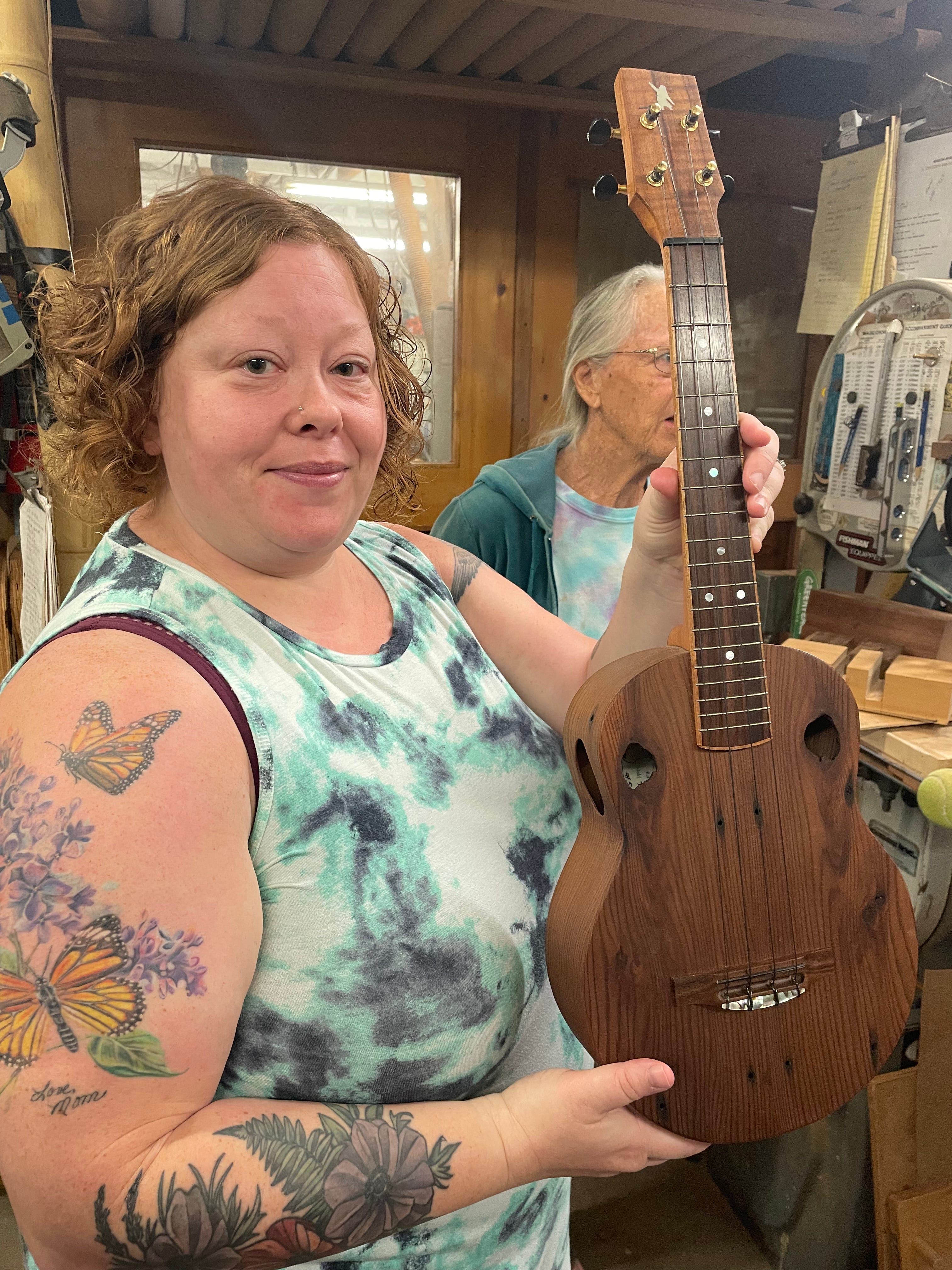
He showed me several instruments he had in progress and we chatted about wood, tools and techniques. He was interested in my research on the old instruments and we talked about how to make old style rope binding. Our favorite instrument of his was this beautiful tenor ukulele with knots and nail holes. It resonated with my approach and aesthetic, but still had Bob’s strong identity on display.
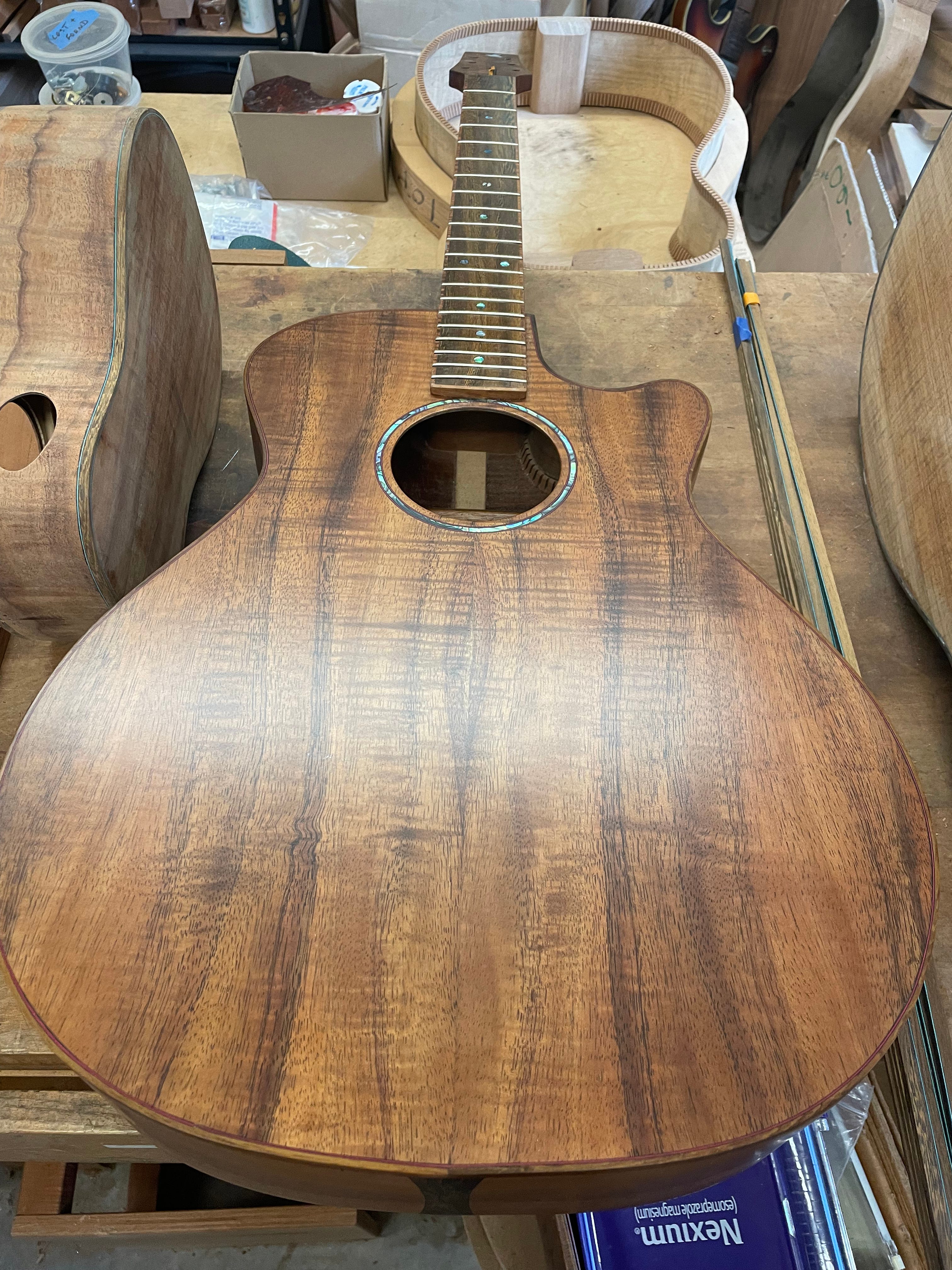
Bob had tons of beautiful Koa, Mango and other Hawaiian woods for sale and I bought a small pile that I couldn’t really afford. Check out this Koa guitar he was working on:
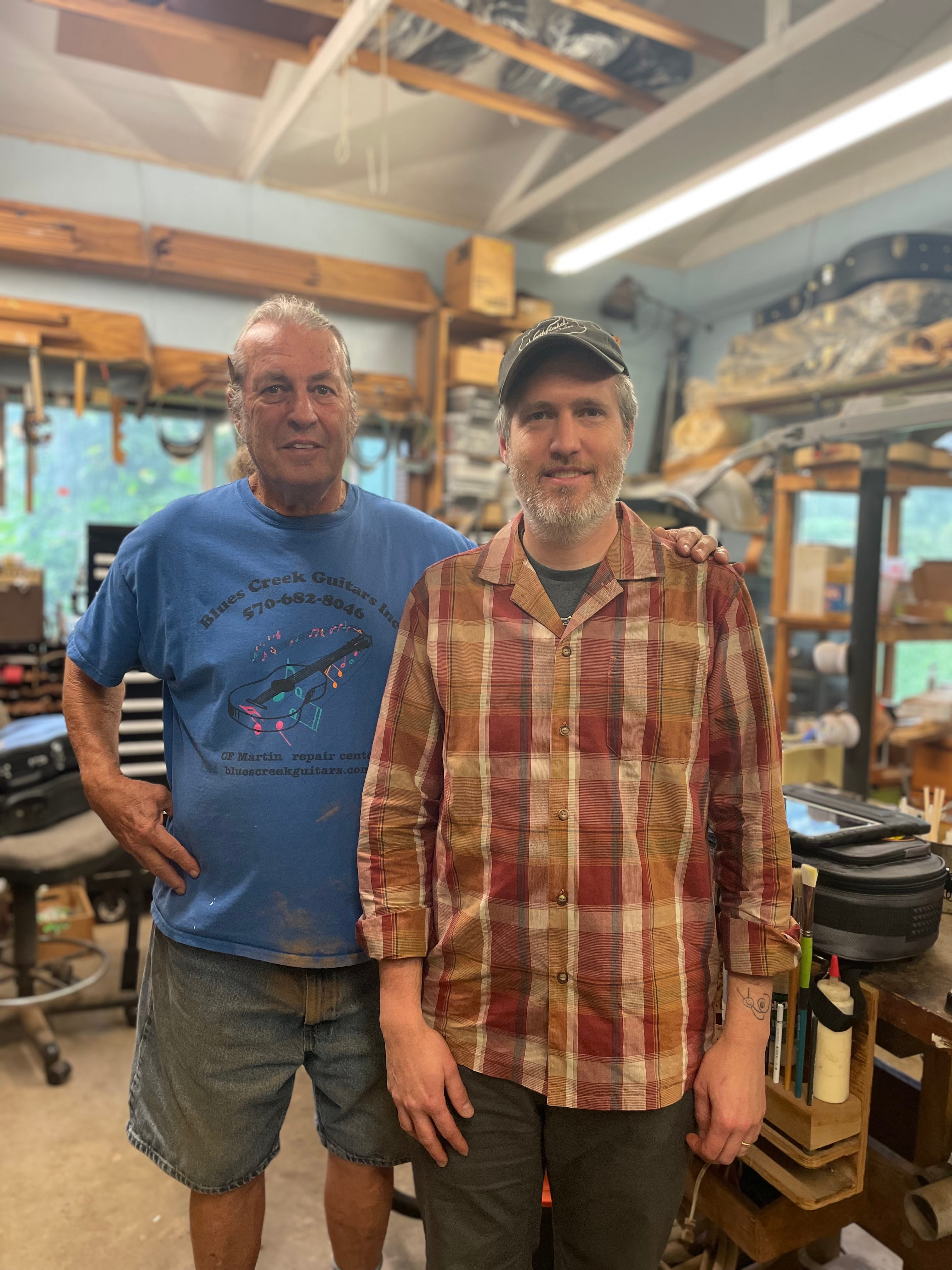
While I was showing him photos on my phone, he asked about Instagram and I encouraged him to try it out. Since our visit, Bob posted pretty regularly and even sold some wood and parts to his followers. I enjoyed staying connected since then, with a nice back and forth about our craft. Last month I heard from Shawn that Bob had an accident while out walking his dog. He suffered a traumatic brain injury and was not expected to live. Bob went home for hospice care and he passed on Jan 18th, 2025. This morning, my iPhone served up this picture of Bob and I in his shop and I was compelled to write this, my first post on Substack.
I have been thinking a lot this winter about folks like Bob and their place in my craft. I am now 45 and have been working with my hands as a musician and builder my whole adult life. I have been struggling with arthritis and tendinitis brought on by overuse and hemophilia. This fall I had two hand surgeries and I had to rest for the winter to heal. I now face a new phase in my career, where I need to slow down and focus to save my hands but also make a living. I realize that folks like Bob are now passing on and I am becoming the Bob to the next generation. If I care about this craft, I have to work to replace myself and educate the next group of younger builders. (Thanks to Christopher Schwartz for slapping me in the face/heart with this idea recently.) I have some ideas for teaching and sharing, but I think I will start here and see what comes of it. Got any ideas for future posts? Please message me, although I think only Scott is reading this right now. (love you man) If you want to follow me as I write about woodworking, luthiery, etc…I hope you will consider subscribing. I have needed a regular outlet for writing besides occasional magazine work and this might be it. This is a public post, free to read, but I plan on writing for paid subscribers regularly.